
What is Your Timber Worth?

Updated: Apr 13
In the timber business, the value of trees as they stand in the woods is known as stumpage value. Stumpage value is the amount paid to the landowner.
The formula for stumpage value is:
Mill Delivery Value – Buyer Costs = Stumpage Value
Components That Affect Mill Delivery Value
The price paid to the Buyer when the forest product is delivered is determined by a number of factors. Prices fluctuate frequently according to demand. A mill may have a “gate price,” or standard price they pay suppliers for a particular product. Additionally, most mills will negotiate special prices for a supplier who has a product of particular quality or quantity or that can be delivered in a particular time frame. Here are the primary components that impact the mill delivery price:
Species. Certain species are in higher demand than others, thus demanding a higher price.
Local supply and demand. A scarcity of product or mills of close enough proximity to one another can create competition and drive the price upward. Demand can be temporary, such as when inclement weather halts logging, lessening the inflow of supply.
Size and quality. Generally speaking, larger, straighter trees with fewer, smaller knots will demand a greater price.
Product type. Pulpwood (small trees under 10 inches in diameter) generally brings the lowest price. Sawtimber (larger trees 14 inches in diameter and above) brings the highest price. There are other products in between these two categories—product specifications vary from market to market.
Timing. Selling timber when demand is high affects delivery value.
Buyer Costs and Profit
There are costs associated with getting the standing timber on the ground and to the various mills within range of the tract.
Logging and trucking are the most substantial costs associated with purchasing a tract of timber; for lower-value products like pulpwood, they can eat up most of the value paid by the mill. Terrain, timber type, volume, and harvest type impact logging costs. Distance and time to the mill determine trucking costs.
Road construction, repair, and erosion control. Gravel and dozer work aren’t cheap.
Legal. Title search and contract preparation.
Profit. The buyer will have a commission built into his cost. This fee will vary from buyer to buyer.
How a Buyer Determines Timber Value
There are two types of sales: per-unit and lump-sum. In a per-unit sale, the buyer determines a stumpage price for each product. The timber is cut, weighed, and the landowner is paid based on the weight of each load. In a lump-sum sale (generally conducted for the final harvest of mature timber), the buyer conducts a timber cruise to determine the timber volumes for each product, then multiplies those volumes by the stumpage price to determine the total value of the timber. This price is paid upfront when a deed or contract is signed. The buyer then has the right to cut the timber for a specified period, generally 12 to 24 months.
Timber Cruises
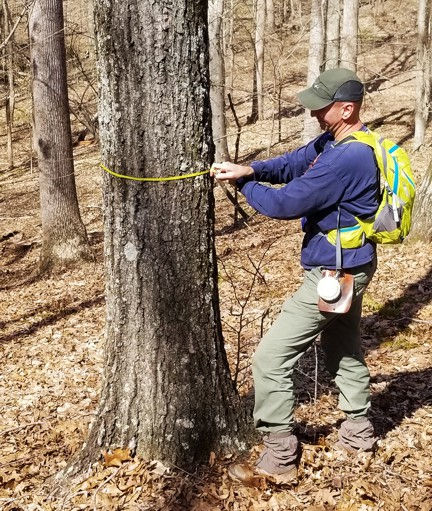
A timber cruise is an inventory that utilizes systematic sampling to determine product volumes. At each sample point, the buyer measures diameters and merchantable heights of the trees and categorizes them by species and product. Smart cruisers employ statistics to analyze their cruise volumes to determine how accurate their numbers are likely to be. Think of the political polls you see around election time—they usually publish a margin of error; the same applies to timber cruises. More on timber cruises here.


Why Offers for Your Timber Can Vary So Much in a Lump-Sum Timber Sale
Each buyer will come up with differing volume estimates. In addition, they’ll all have different mill delivery prices, logging costs, roadwork estimates, and commission holds. Combine these small differences with thousands of tons of timber, and you can end up with tens (sometimes hundreds) of thousands of dollars in price differences. The example below is the most basic of timber sales, with only two products. Sales with many more products can have more extreme differences in offers.

As you can see, when selling, it pays to create a competitive environment. Too many times, I see landowners get burned by either negotiating directly with a buyer or by failing to create an attractive, competitive bid situation.
The Other Big Factor that Affects a Buyer's Offer
The sale setup plays a huge role in the final price.
Imagine you are a timber buyer. Landowner A calls you up and says, "I want to sell my timber." He's expecting you to come out, assess his timber, and make an offer, with no guarantee he'll even sell. Or maybe he's going to take your price and shop it around. You could end up wasting days researching maps and boundary lines, cruising timber, and negotiating prices and contract details. Liability for lost time and other unknowables is high in this situation. Also, the landowner is an unknown. Is he litigious? How is he to work with? Your offer must take these variables into account.
Landowner B hires a forestry consultant to handle his sale. You, the buyer, receive a sale packet with timber description, detailed maps with accurate acreages, contract terms, and sale area and parcel boundary files for your GPS unit. Boundaries and access are clearly marked on the ground. A bid submission deadline date and time is set—you are dealing with someone serious about selling. You know there will be some competition, but you'll only have a few hours in cruising the tract to make your own assessment of value. All the details are worked out ahead of time and you've worked with this forestry consultant before. You are confident you can offer your top price without risking wasting a bunch of time or encountering unanticipated problems when the timber is logged.
Timber sales should be clear and concise. Buyers don't have the time or interest in wasting a loads of their time dealing with an uninformed, unpredictable landowner unless they are getting a deal (or steal in some cases) on the timber. You will pay the forestry consultant a fee (usually a percentage of the sale), but you'll come out with financially ahead with a lot less headache.
Pre-merchantable Tree Value
Young trees that aren’t big enough for harvest still have value. Think of them like a savings bond that hasn’t matured yet. To determine the stand’s present value, a forester must estimate what the stand will be worth in the future, then discount that value to the present.
Example: a 10-year-old pine plantation that currently has 290 trees per acre and is located on a site with a site index (a measure of soil productivity) of 65. Using a growth-and-yield program and price-trending data, with a discount rate of 7%, he estimates that the stand is presently worth $650/acre. Pre-merchantable valuation is something many buyers and sellers overlook in land transactions.
Summary
Determining timber value is more complicated and nuanced than most landowners imagine. Timber valuation should always be done by someone representing your best interests, not a buyer trying to separate you from your timber. Feel free to contact me with questions or to discuss your timber valuation and marketing needs.


Comments